Hot Saller Tin zinc barrel plating line chromate conversion rectifier electroplating Only USD $75.200.00 Good Condition and ready to use Come with 1 year warranty. A comprehensive tin-zinc barrel electroplating line requires an integrated system of process tanks, mechanical barrel assemblies, a precise rectification unit, and dedicated chemical post-treatment stages for chromate conversion. Tin-zinc alloy plating (typically 70-80% tin and 20-30% zinc) provides exceptional corrosion resistance, excellent solderability, and a ductile finish, making it a premier choice for automotive fasteners, electrical components, and hardware
There are 20 barrels measuring approximately 22″ x 60″.
The tank ID sizes are 74” x 31” x 36” for single sizes.
List of tanks:
1pc 8 station tank
1pc 7 station tank
9pc single tank
2pc double tank
2pcs 2 tank counter flowing rinse
1pc 4 station counter flowing rinse
There are 3 rectifiers included.
Rectifier 1, 460 input, 9v output, 3 phase 60 herts, 225 amps in, 14,000 out
Rectifier 2, 460v 3phase 60 hertz, 9 volt 9,000 amp output
Rectifier 3, 460v 3phase 60 hertz, 24v 4,000 amp output
The tanks are mounted in 4 sections on steel tube skids.
Each section is approx 10ft wide x 30ft long. If you installed the entire line it would be 10ft x 120ft, but if you only did the zinc portion,
which was our plan, we think it would take about 10ft x 90ft.
Tin zinc barrel plating line chromate conversion rectifier electroplating Specifications
The rectifier is the backbone of the electroplating line, controlling the current density required to deposit the specific 70-85% tin and 15-30% zinc alloy matrix.
- Output Voltage: Typically 6V to 12V for barrel lines. Higher voltage (up to 12V) is required to overcome the electrical resistance of the barrel mesh and bulk workload.
- Control Mode: Constant Current (CC) and Constant Voltage (CV) modes with automatic crossover. CC mode is critical for maintaining the precise tin-to-zinc alloy ratio.
- Ripple Factor: < 3% RMS at full rated output. Low ripple prevents uneven alloy distribution and ensures a bright, consistent finish.
- Regulation Accuracy: ±1% or better to prevent shifts in the deposition rates of the two different metals.
- Cooling Options: Air-cooled (forced air with anti-corrosion coating) or Water-cooled (ideal for harsh, corrosive plating shop environments).
- Control Interface: RS485, Modbus, or 4-20mA/0-10V analog inputs for PLC integration and automated recipe management.
Electroplating Line Configuration
Tin-zinc plating provides superior galvanic protection (especially for aluminum components) and excellent solderability.
- Barrel Design: Heavy-duty polypropylene barrels with optimized perforation sizes to maximize solution transfer while retaining small parts.
- Anodes: Soluble tin-zinc alloy anodes (matching the target deposit ratio) or separate tin and zinc anodes with split-circuit rectifier controls to prevent anode polarization.
- Chemistry Control: Automatic dosing systems for brighteners, stabilizers, and pH adjusters (alkaline or neutral chemistries are most common).
- Cathode Contacts: Danglers or center-rod contacts designed for high current distribution within the tumbling part mass.
Chromate Conversion Post-Treatment
Because tin-zinc is highly resistant, it requires specific chemical activation before receiving a protective passivate.
- Pre-Activation: A mild acid dip (typically 0.5–1% nitric or sulfuric acid) to clear surface oxides before passivation.
- Passivation Type: Trivalent chromium (Cr³⁺) formulations to comply with RoHS and REACH environmental regulations.
- Film Variations: Clear/blue-bright or iridescent yellow/thick-film passivates depending on salt-spray requirements.
- Sealants/Topcoats: Often integrated into the post-chromate rinse stations to enhance friction control (torque-tension properties) and boost corrosion resistance beyond 1,000 hours of salt spray testing

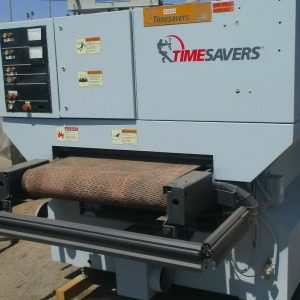 37 Timesavers Orbital Sander with Dual Orbital Heads
1 × $7,800.00
37 Timesavers Orbital Sander with Dual Orbital Heads
1 × $7,800.00 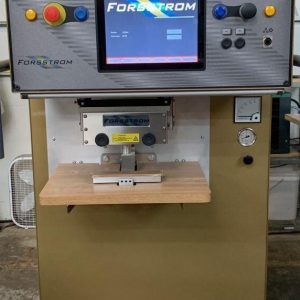 Forsstrom sonic welding machine
1 × $18,000.00
Forsstrom sonic welding machine
1 × $18,000.00 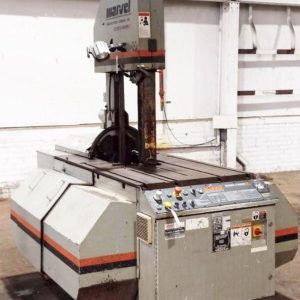 18 X 22 MARVEL 8-MARK III VERTICAL VERTICAL TILT BAND SAW
1 × $9,900.00
18 X 22 MARVEL 8-MARK III VERTICAL VERTICAL TILT BAND SAW
1 × $9,900.00 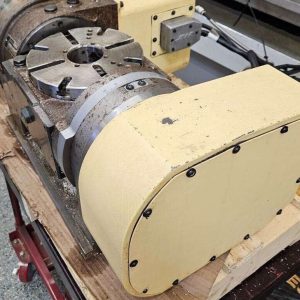 5AX201YA Nikken Haas 4th 5th Axis Rotary TR160BL TR210BL Brushless Indexer
1 × $3,200.00
5AX201YA Nikken Haas 4th 5th Axis Rotary TR160BL TR210BL Brushless Indexer
1 × $3,200.00 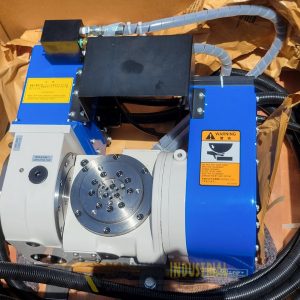 KITAGAWA TT101AFF21 5TH AXIS ROTARY TABLE
1 × $12,990.00
KITAGAWA TT101AFF21 5TH AXIS ROTARY TABLE
1 × $12,990.00 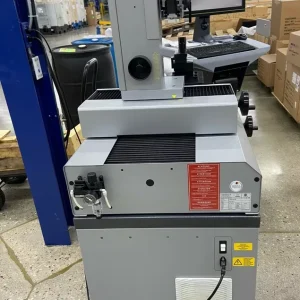 Used Zoller Hyperion 300 Tool Pre-setter Precision CNC Tooling
1 × $57,900.00
Used Zoller Hyperion 300 Tool Pre-setter Precision CNC Tooling
1 × $57,900.00 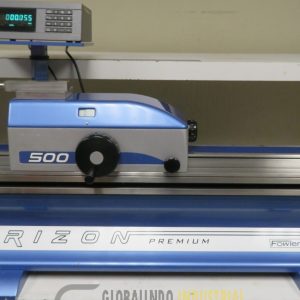 Fowler Trimos Horizon Premium Universal Length Measuring Machine 500mm
1 × $12,700.00
Fowler Trimos Horizon Premium Universal Length Measuring Machine 500mm
1 × $12,700.00 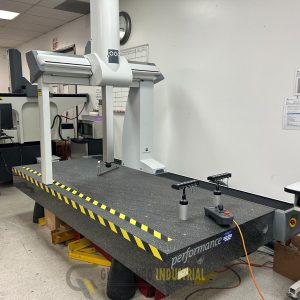 Brown & Sharpe Global CMM 9.20.8 Coordinate Measuring Machine
1 × $55,665.00
Brown & Sharpe Global CMM 9.20.8 Coordinate Measuring Machine
1 × $55,665.00 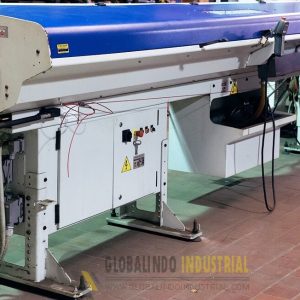 IEMCA Master 80 HF - CNC Bar Feeder
1 × $10,500.00
IEMCA Master 80 HF - CNC Bar Feeder
1 × $10,500.00 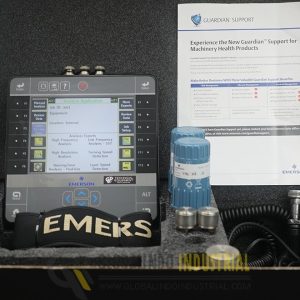 Emerson CSIAMS 2140 Machine Health Analyzer - Olympus GE Waygate Fluke Extech
1 × $16,600.00
Emerson CSIAMS 2140 Machine Health Analyzer - Olympus GE Waygate Fluke Extech
1 × $16,600.00 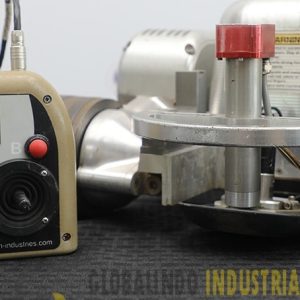 Jireh Tripod Magnetic Robotic Crawler Inspection System
1 × $8,800.00
Jireh Tripod Magnetic Robotic Crawler Inspection System
1 × $8,800.00 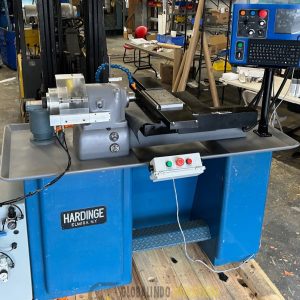 DSMA with OmniTurn G4 control
1 × $19,800.00
DSMA with OmniTurn G4 control
1 × $19,800.00 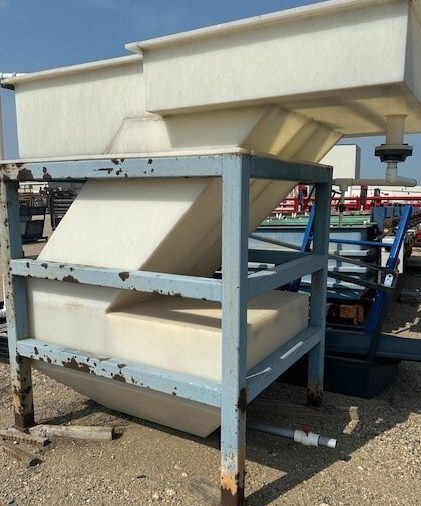


There are no reviews yet.